A Day in the Life of a Massage Therapy Student
May 28, 2026 | Massage Therapy | Share this Post:Choosing a career in massage therapy means stepping into a field that blends healthcare knowledge, hands on skill development, communication, and personal wellness. At the Schools of Medical Massage, students experience a balance of classroom learning and practical training designed to prepare them for real world massage therapy careers.
No two days are exactly the same, but massage therapy students quickly settle into a rhythm that combines lectures, studying anatomy, practicing techniques, working with classmates, and gaining experience in a clinical setting. Here is what a typical day in the life of a massage therapy student may look like.
Starting the Day: Preparing for a Professional Environment
Massage therapy students often begin their day by preparing for a professional learning environment. At SOMM, students are expected to maintain professional appearance standards and wear scrubs during training and clinic work.
Many students arrive early to review notes, organize supplies, or talk with classmates before class begins. Because massage therapy is both mentally and physically engaging, students often learn to create routines that help them stay focused and energized throughout the day.
Unlike some educational programs that are mostly lecture based, massage therapy training requires students to stay active and engaged for much of the day. Students spend time moving between classrooms, practicing techniques, participating in demonstrations, and completing hands on learning exercises.

Morning Classroom Learning
A typical day often begins with classroom instruction. Massage therapy students study a variety of subjects that help them understand both the science and practice of massage therapy.

At SOMM, students complete coursework in anatomy and physiology, pathology, ethics, business law, and massage theory and practicum.
One of the most important parts of the program is anatomy and physiology. Students learn about:
- The muscular system
- The skeletal system
- The nervous system
- The cardiovascular system
- The lymphatic system
- Body movement and mechanics
- Common pathologies and conditions
Understanding how the body works is essential for massage therapists. Students need to know how muscles interact, how injuries can affect movement, and when massage therapy may or may not be appropriate.
Instructors may use lectures, diagrams, skeletal models, demonstrations, videos, and interactive discussions to help students understand complex topics. SOMM campuses also provide learning resources and anatomy related educational materials to support students throughout the program.
Students are encouraged to ask questions and participate in discussions, creating an interactive learning environment rather than simply sitting through lectures.
Learning More Than Massage Techniques
Many people are surprised to learn that massage therapy school covers much more than massage strokes and relaxation techniques.
Massage therapy students also learn:
- Professional ethics
- Client communication
- Hygiene and infection control
- Draping and positioning
- Documentation and client records
- Safety practices
- Business fundamentals
- Professional boundaries
These topics help prepare students for the realities of working with clients in professional healthcare and wellness settings.
At SOMM, ethics and professional conduct are emphasized throughout the program. Students learn about client confidentiality, communication skills, and maintaining professional standards in both classroom and clinic environments.
Midday Hands-On Practice
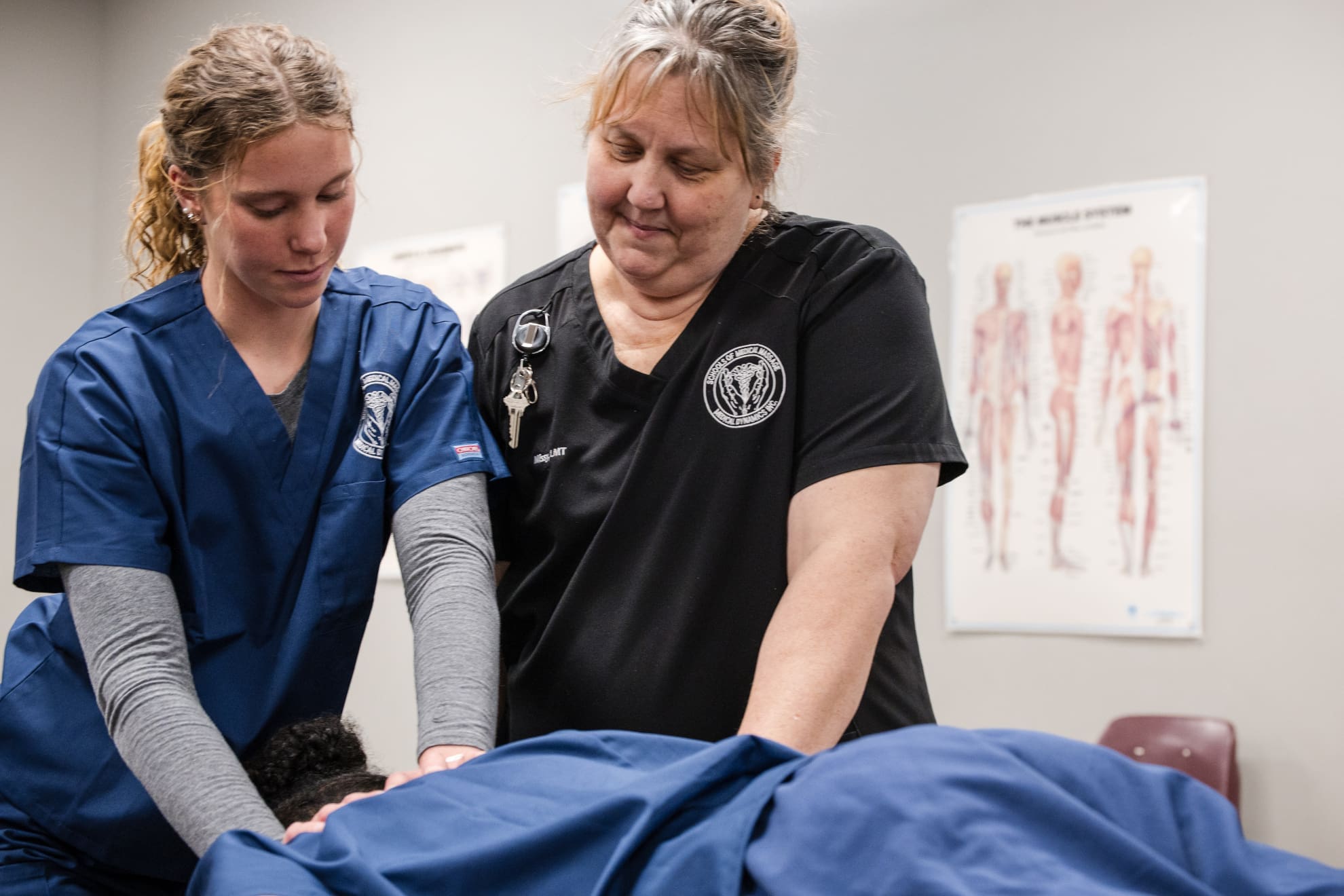
One of the most exciting parts of massage therapy school is the hands-on practice. After learning concepts in the classroom, students spend time applying those concepts through guided practical work.
During massage theory and practicum courses, students practice:
- Muscle palpation
- Draping techniques
- Body mechanics
- Client positioning
- Massage movements and pressure control
- Treatment approaches for different body areas
Students frequently work with classmates to practice techniques in a supervised setting. Instructors observe students, provide feedback, demonstrate techniques, and help students improve their form and confidence.
At first, many students feel nervous about practicing massage techniques on others. Over time, repeated practice helps students become more comfortable with touch, communication, and movement.
This hands-on learning environment allows students to gradually build confidence while developing the physical skills required for massage therapy careers.

Building Physical Awareness
Massage therapy students also learn how important body mechanics are for their own long-term health.
Throughout the day, instructors often reinforce proper posture, hand positioning, movement, and ergonomics. Learning to use proper body mechanics helps students avoid fatigue and reduce strain on their hands, wrists, shoulders, and back.
Students quickly discover that massage therapy can be physically demanding work. Developing healthy habits early can help them build sustainable careers in the field.
Clinic Experience and Real-World Training
As students progress through the program, they begin gaining experience in the student clinic environment.
Clinical practicum is an important part of massage therapy education. Students complete office and administrative duties while also providing massages to members of the public under supervision.

Working in the clinic helps students gain experience with:
- Client communication
- Scheduling and professionalism
- Intake procedures
- Time management
- Practical massage sessions
- Professional conduct
- Building confidence with real clients
This portion of training often feels like a major turning point for students because it allows them to apply what they have learned in a real-world environment.
Students begin to understand how to adapt sessions to individual clients while maintaining professionalism and proper technique.
Study Time Outside of Class
Massage therapy students also spend time outside of class studying and reviewing material. Because anatomy and physiology courses involve significant medical terminology and scientific concepts, many students dedicate time to reviewing notes, studying muscles, memorizing body systems, and preparing for exams.
Students may also practice techniques at home or work with classmates outside of scheduled class hours to improve their skills.
Massage therapy school requires commitment and consistency, but many students find the work rewarding because they can directly connect what they learn in class to real life applications.
Building Friendships and Support Systems
One thing many massage therapy students do not expect is how close they often become with classmates. Because students spend so much time practicing techniques together, learning communication skills, and supporting each other through challenging coursework, strong friendships often develop naturally.
The classroom environment can become very collaborative. Students frequently encourage one another, exchange study tips, and help each other improve practical skills. This sense of community can make the educational experience more enjoyable and help students stay motivated throughout the program.

Ending the Day With New Skills and Confidence
By the end of the day, massage therapy students have usually balanced both academic and practical learning experiences.
Some days may focus more heavily on anatomy and theory, while others emphasize hands on work or clinic practice. Over time, students build the knowledge, technical abilities, and professional confidence needed to enter the massage therapy field.
The Massage Therapy program at SOMM combines classroom instruction with supervised practical training to help students prepare for entry level careers in massage therapy and related wellness environments. The program includes anatomy and physiology, massage theory and practicum, ethics, business law, and clinical experience.
For students who enjoy helping others, learning about the human body, and working in a hands on environment, massage therapy school can offer a rewarding and engaging educational experience.