How Long Does It Take to Become a Massage Therapist?
June 24, 2026 | Massage Therapy | Share this Post:One of the first questions many future students ask is simple: how long is massage therapy school? The answer depends on the state where you plan to practice, the program you choose, and whether you attend during the day or in the evening. For students in Ohio, the path to becoming a licensed massage therapist typically includes three main stages: completing massage therapy training, meeting licensure requirements, and preparing to enter the workforce.
The good news is that massage therapy can offer a focused career training path without requiring a traditional college degree. Instead of spending several years in school, students can complete a dedicated massage therapy program, prepare for the licensing exam, and begin pursuing entry-level opportunities after meeting state requirements.
How Long Is Massage Therapy School?
In Ohio, massage therapy students must complete an approved massage therapy education program. According to the Schools of Medical Massage catalog, Ohio licensure requirements include completing an approved program with at least 600 total hours of classroom instruction, completing CPR training, completing approved instruction in ethics and basic business practices, passing the Massage & Bodywork Licensing Examination, and applying to become a Licensed Massage Therapist. The catalog also notes that Ohio does not require an associate degree to become an LMT.
At the Schools of Medical Massage, students enrolled in day classes can complete the Massage Therapy program in approximately 45 weeks. Students enrolled in evening classes can complete the program in approximately 58 weeks. This means many students can finish their classroom, hands-on, and clinical training in about one year, depending on the schedule that fits their life.
That timeline can be helpful for students who are balancing school with work, family, or other responsibilities. Day classes may allow students to complete the program sooner, while evening classes may be a better option for those who need more flexibility during standard work hours.

What Happens During Massage Therapy Training?
Massage therapy school is more than learning massage techniques. A strong program combines classroom learning, hands-on practice, clinical experience, and professional preparation.
Students can expect to study subjects such as anatomy, physiology, pathology, medical terminology, massage theory, body mechanics, hygiene, ethics, business law, and client communication. These topics help students understand not only how to perform massage techniques, but also when massage may or may not be appropriate for a client.
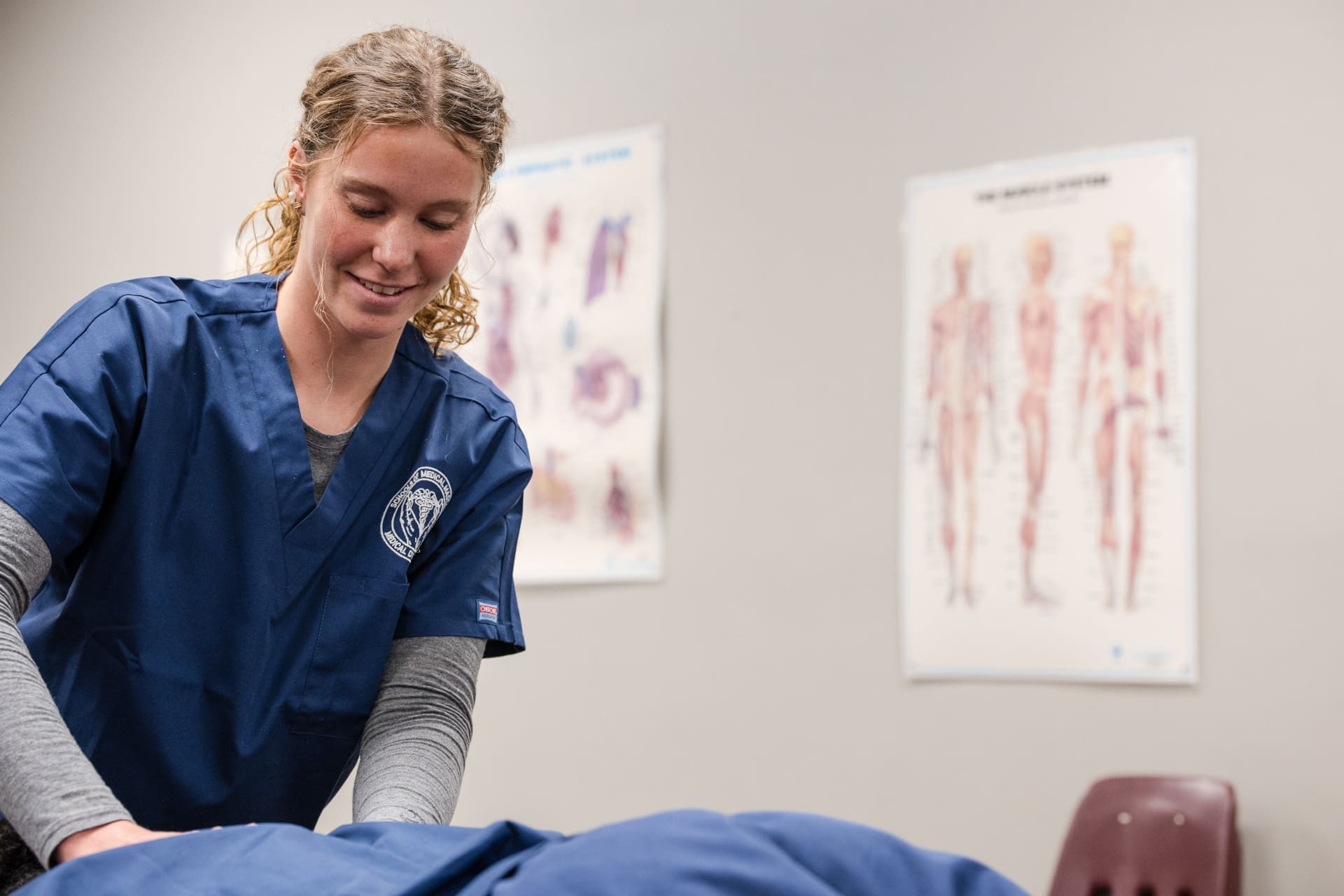
Hands-on practice is also a major part of the training process. Students learn how to apply massage techniques safely, use proper draping, communicate with clients, maintain professional boundaries, and protect client confidentiality. Clinical experience gives students the opportunity to build confidence while practicing in a supervised setting.
The goal is to help students develop both technical skills and professional judgment. Massage therapists work directly with people, often in situations where clients may be dealing with discomfort, stress, injury recovery, or wellness goals. Because of that, training includes both the science of the body and the professionalism needed to work with clients responsibly.
What Can Affect the Training Timeline?
The published program length gives students a helpful estimate, but each person’s timeline can vary. A few factors can affect how long it takes to complete massage therapy school.
The first is schedule. A day program may move at a faster pace than an evening program. The second is attendance. Because massage therapy programs include required hours and hands-on competencies, missed time generally needs to be made up before graduation. The third is academic progress. Students must complete required coursework and clinical requirements before receiving their diploma.
Students should also account for time outside of class. Studying anatomy, preparing for exams, practicing techniques, and completing assignments are all part of the process. While the program itself may be completed in approximately 45 or 58 weeks at SOMM, students should plan for a steady commitment throughout that period.
How Long Does Licensing Take After Graduation?
After completing massage therapy school, the next stage is licensure. In Ohio, graduates must pass the MBLEx and apply for licensure through the State Medical Board of Ohio. Current Ohio information lists eligibility items that include being at least 18, having a high school diploma or equivalent, completing required education, and submitting FBI and Ohio BCI criminal record checks.

The MBLEx is administered by the Federation of State Massage Therapy Boards. FSMTB describes the MBLEx as a national entry-level licensure examination used by state regulators to evaluate whether an applicant can practice massage safely and competently.
The exact licensing timeline can vary. Some graduates may move through the process quickly if they schedule their exam promptly, submit complete paperwork, and complete background checks without delays. Others may need additional time for exam preparation, application processing, or document review.
A practical way to think about the timeline is this: massage therapy school is the largest portion of the journey, but students should still plan for extra time after graduation to complete the licensing process before practicing as a licensed massage therapist.
When Can You Start Looking for Massage Therapy Jobs?
Students do not have to wait until the very end of their training to start thinking about employment. In fact, the final months of school are often a good time to prepare a resume, explore different work settings, and think about what kind of massage therapy environment fits your goals.
Massage therapists may work in a variety of settings, including massage clinics, spas, chiropractic offices, wellness centers, fitness facilities, healthcare-related environments, or private practice. The U.S. Bureau of Labor Statistics notes that massage therapists typically complete a postsecondary education program that combines study and hands-on experience, and that most states regulate the profession through licensure or certification.
Entering the workforce may also involve decisions beyond getting licensed. Some graduates look for employee positions, while others consider independent contractor work or self-employment. Each path comes with different responsibilities. For example, self-employed massage therapists may need to manage scheduling, client communication, supplies, taxes, marketing, and business records.
Because of this, business and ethics training can be especially useful. A massage therapist is not only providing a service; they are also building trust, maintaining professional standards, and managing client relationships.
A Sample Timeline for Becoming a Massage Therapist
For students considering SOMM, the general timeline may look like this:
Start by applying to the program, meeting admissions requirements, and preparing for your first class. Once enrolled, complete the Massage Therapy program in approximately 45 weeks for day classes or approximately 58 weeks for evening classes. During that time, complete classroom instruction, hands-on practice, clinical requirements, CPR certification, and MBLEx preparation.
After graduation, take or complete the required licensing exam steps, submit your application for licensure, complete required background checks, and wait for state review. Once licensed, you can begin pursuing massage therapy employment or practice opportunities that align with your goals.

Is Massage Therapy a Fast Career Path?
Compared with many careers that require a two-year or four-year degree, massage therapy can be a relatively focused path. However, it is still a serious healthcare-related profession that requires commitment, study, practice, and licensure.
For many students, the answer to “how long is massage therapy school?” is about one year. At the Schools of Medical Massage, the day program can be completed in approximately 45 weeks, while the evening program can be completed in approximately 58 weeks. After that, graduates must complete the licensing steps required by the state before entering the profession as licensed massage therapists.
For students who are ready for hands-on training, enjoy working with people, and want a career path centered on wellness, massage therapy school can be a practical next step toward a new professional future.