What to Expect During Your First Week of Massage Therapy School
July 29, 2026 | Massage Therapy | Share this Post:Starting massage therapy school is an important step. You may be entering directly after high school or college, or you may be preparing for a career change after spending years in another field. Either way, it is normal to feel both excited and uncertain before your first day.
Knowing what to expect during your first week of massage therapy school can make the transition easier. You will begin learning how the program works, meet the people who will be part of your education, and start building the academic and professional foundation you will use throughout your training.
Schools of Medical Massage (SOMM) offers massage therapy training at campuses in Cincinnati, Cleveland, Columbus, Dayton, and Lima. Although each class may progress a little differently, here is a general idea of what new students can expect as they begin the program.
Your First Step: New Student Orientation
Your introduction to SOMM begins before regular classes start. All incoming students attend a New Student Orientation scheduled before their first day of class.
During orientation, you will learn about the school’s educational system, student services, policies, and procedures. You will also tour the campus and become familiar with important areas you will use throughout the program.
Students receive orientation materials covering topics such as:
- Study techniques
- Time management
- Problem-solving strategies
- Learning resources
- School policies and expectations

Orientation is also a good time to ask practical questions about your class schedule, parking, required materials, attendance, and other parts of student life. Understanding these details before classes begin can help you arrive on your first day feeling more prepared.
What Classes Begin in Massage Therapy School?
SOMM’s Massage Therapy program combines three primary areas of study:
- Anatomy and Physiology
- Massage Theory and Practicum
- Clinical Practicum
These areas work together to help students understand the human body, develop massage techniques, and learn how to work with clients in a professional setting.
During the beginning of the program, much of your attention will be placed on foundational anatomy and massage concepts. You will not be expected to understand everything immediately. The curriculum begins with introductory material and builds as you progress through each semester.

Beginning Anatomy and Physiology
Your first Anatomy and Physiology course introduces the scientific knowledge needed to understand how massage affects the body.
Early subjects may include:
- Anatomical terminology
- Body regions and cavities
- Anatomical position
- Planes of movement
- The skeletal system
- Muscle architecture
- Basic chemistry and cells
At first, some of the terminology may feel like learning a new language. Breaking the information into smaller sections and reviewing it regularly can make it more manageable.
The goal is not simply to memorize the names of bones and muscles. As you move through the program, you will learn how anatomy, physiology, and pathology relate to safe and effective massage therapy.
Learning Foundational Massage Skills
Massage Theory and Practicum introduces the concepts and techniques that students will continue developing throughout the program.
The first course covers subjects such as massage terminology, the history of massage, body mechanics, draping, positioning, equipment, massage products, personal hygiene, infection control, and safety practices.
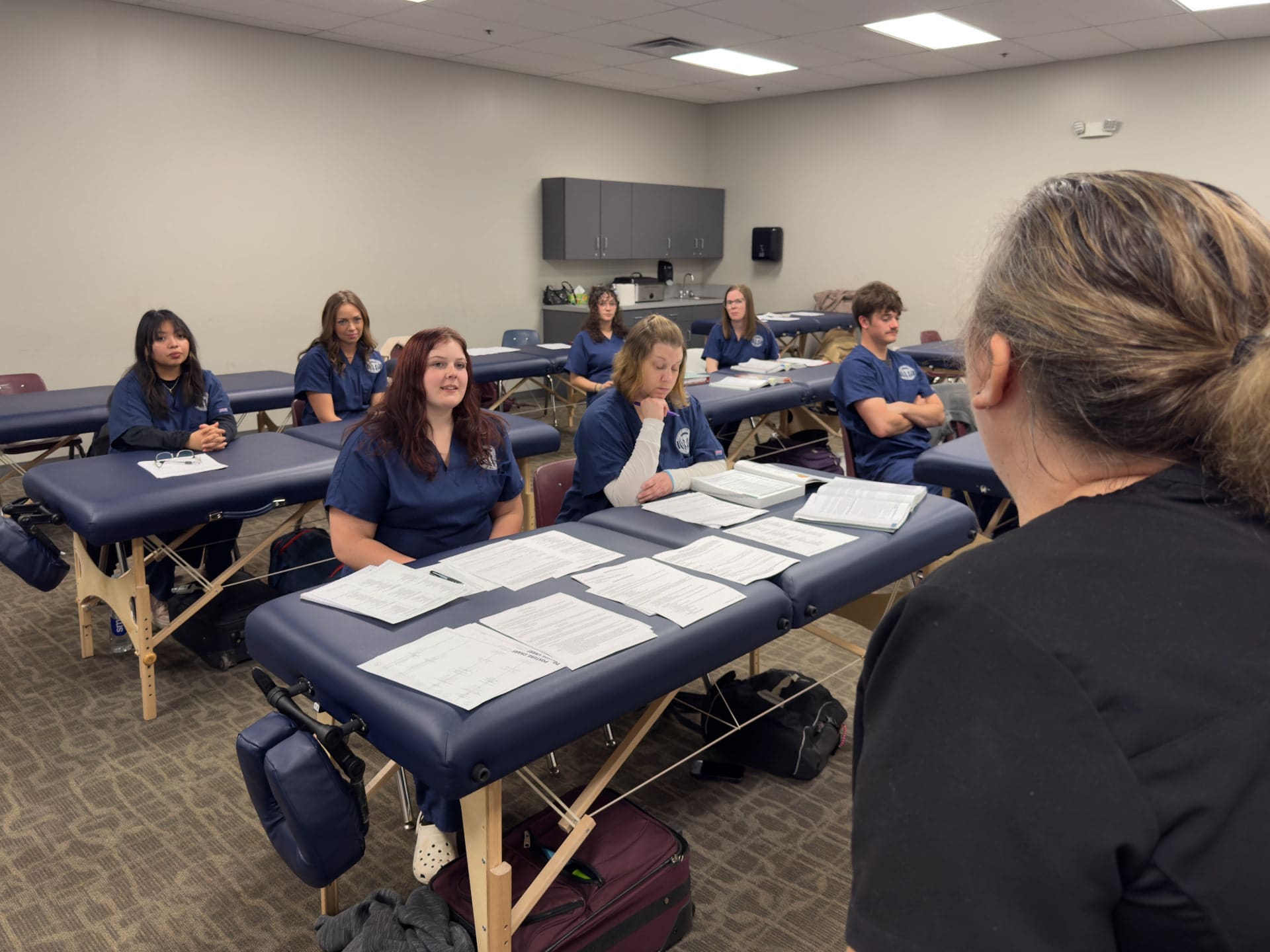
Some lessons will take place in a traditional classroom setting, while others involve supervised hands-on practice. You may begin by learning how to position yourself correctly, prepare a massage area, communicate professionally, and protect both your body and the person receiving the massage.
Good body mechanics are especially important. Massage therapy is physical work, and learning how to use proper posture and movement can help you perform techniques more effectively while reducing unnecessary strain.
How Hands-On Training Fits Into the Program
Many students are drawn to massage therapy school because they want a hands-on education. At SOMM, practical training is combined with classroom instruction so students can apply what they learn.
You may not begin working with members of the public during your first week. Before entering the student clinic, you will need to build the knowledge, technique, and professional habits required to work with clients appropriately.
As your education progresses, Clinical Practicum provides experience in SOMM’s student clinic. The full program requires students to complete clinic duties and relaxation massages for members of the public under the school’s requirements and supervision.

Your first week begins preparing you for that experience by introducing expectations related to hygiene, draping, communication, boundaries, safety, and professional conduct.
Adjusting to Your Class Schedule
One of the biggest first-week adjustments may be getting used to a new routine.
SOMM offers day and evening class schedules, allowing students to select an option that may better fit their other responsibilities. Day students typically complete the program in approximately 45 weeks, while evening students typically complete it in approximately 58 weeks. The program is delivered entirely on campus rather than through distance education.
Regardless of the schedule you choose, attendance is important. Students must complete all required scheduled class and clinical hours. Missed time generally must be made up before graduation, and attendance problems can affect a student’s ability to progress through the program.
During your first week, begin developing a routine that gives you enough time to arrive before class, organize your materials, complete assignments, and review what you have learned.
Understanding the Dress Code
Massage therapy students are preparing to work in a professional health and wellness environment. SOMM’s dress and appearance standards are intended to help students begin developing professional habits while they are still in school.

Once students receive their scrubs, they are expected to wear them each day. Clothing should be neat and clean, and hats, hoodies, jackets, or other items should not cover the scrub top. White tennis shoes are preferred.
Personal hygiene is also an important part of massage therapy training. Students are expected to maintain clean hair, clothing, and hands, keep their fingernails short, and avoid strong perfumes or odors when working with others.
These standards help create a professional learning environment and prepare students for future classroom, clinic, and workplace expectations.
Preparing for Supplies and Additional Requirements
The school provides the primary equipment used to support classroom and hands-on training. However, students are responsible for some additional items and requirements that are not included in tuition.
Depending on the current program requirements, these may include massage lotions, sheets, CPR training, and receiving a professional massage from a Licensed Massage Therapist. Because costs and requirements can change, speak with the admissions team and review the current school catalog before classes begin.
You do not necessarily need every item on your first day. Your instructors or campus staff will explain what is needed and when you should have it.
Meeting Your Instructors and Classmates
Your instructors and classmates will become an important part of your massage therapy school experience.
Students may enter the program at different stages of life and with different educational or professional backgrounds. Some may already be familiar with health care or wellness, while others may be encountering anatomy and massage terminology for the first time.
Hands-on practice requires students to communicate respectfully, accept constructive feedback, and work with one another professionally. The SOMM catalog emphasizes personal responsibility, respectful care, professional integrity, and creating a supportive learning environment.

During your first week, focus on becoming comfortable asking questions, listening to your instructors, and participating in class. You are beginning to develop both technical skills and the professional behavior expected of massage therapists.
What If the First Week Feels Overwhelming?
It is normal for the first week of massage therapy school to feel like a significant adjustment. You may be learning unfamiliar terminology, changing your daily schedule, and becoming comfortable with a new type of hands-on education at the same time.
You do not have to master the entire program during your first few days. Concentrate on understanding the foundational concepts, keeping up with assignments, and asking for clarification when you need it.
SOMM instructors and staff provide academic advising and student support throughout the program. Students who have questions or concerns are encouraged to speak with an instructor, staff member, or campus director rather than waiting until a small problem becomes more difficult to manage.
What Comes After Your First Week?
Your first week is only the beginning of your massage therapy education.
Over the following months, you will continue studying anatomy and physiology, pathology, massage techniques, ethics, business practices, client communication, and professional standards. You will also gain supervised experience through the student clinic.
Students who successfully complete the program receive a diploma and are trained to sit for the Massage & Bodywork Licensing Examination. Graduates must pass the MBLEx and complete the State Medical Board of Ohio’s application requirements to become Licensed Massage Therapists.
The first week helps establish the habits that can support you throughout that process: attending class consistently, studying regularly, practicing carefully, communicating professionally, and asking for help when you need it.
Beginning massage therapy school may feel unfamiliar, but each class, lesson, and practice session is another step toward understanding the profession and preparing for a future in massage therapy.