
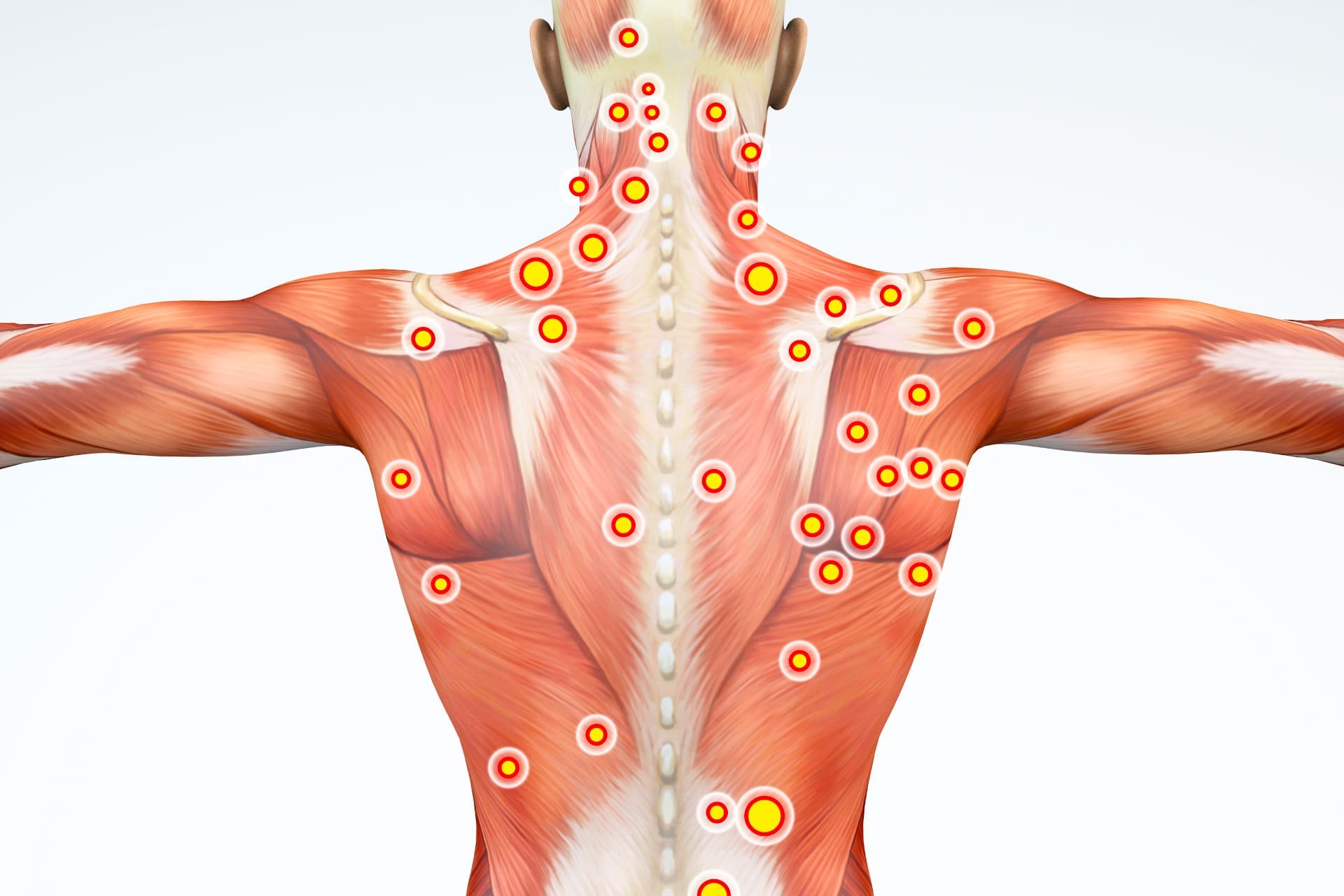
Understanding Trigger Point Therapy
September 10, 2026 | Massage Therapy | Share this Post:Massage therapy includes many different techniques, ranging from broad movements designed to promote relaxation to more focused approaches that address specific areas of muscular tension. Trigger point therapy falls into that second category.
Trigger point therapy involves identifying sensitive areas within muscles or surrounding myofascial tissue and applying focused manual pressure to those areas. For massage therapists, learning the technique involves more than simply finding a sore spot and pressing on it. It requires an understanding of anatomy, careful palpation, communication with the client, and the ability to determine when a particular technique is appropriate.
These skills are also part of what makes trigger point therapy an important topic during massage therapy training.
What Is a Trigger Point?
A trigger point is generally described as a localized, sensitive area within muscle or myofascial tissue. People sometimes describe these areas as a tight spot or “knot.” Pressure on a trigger point may cause discomfort directly at that location, but it can also produce discomfort somewhere else in the body. This is known as referred pain.
For example, a sensitive area in one muscle of the shoulder may be associated with discomfort elsewhere around the shoulder, neck, or upper back. Because the place where someone feels discomfort is not always the same place where muscular tension is located, massage therapists need a strong understanding of the relationships between muscles and surrounding structures.
Trigger points and their role in myofascial pain continue to be studied, and researchers do not always use identical criteria for identifying them. However, trigger point techniques have been used within massage and manual therapy for decades. The American Massage Therapy Association describes trigger point massage as an established part of the massage profession that focuses on small, tight areas within muscles that may also produce discomfort elsewhere.

What Is Trigger Point Therapy?
During trigger point therapy, a massage therapist first uses palpation to evaluate the soft tissue and identify areas that feel unusually tight or sensitive. The therapist can then apply controlled pressure or other manual techniques to the area.
The amount of pressure and length of time it is applied can vary depending on the technique, the location being addressed, and the client’s response. Rather than using as much pressure as possible, the therapist needs to work within the client’s comfort level and continually evaluate how the tissue responds.
Trigger point therapy may also be incorporated into a larger massage session rather than performed as an isolated treatment. A therapist might use broader massage techniques first, address a particular area more specifically, and then return to movements involving the surrounding muscles.
Trigger point techniques also overlap with other approaches used in massage therapy. Myofascial release, for example, uses sustained pressure and stretching techniques to address tightness within the body’s fascial tissues. Cleveland Clinic notes that trigger points are commonly addressed as part of myofascial release therapy.
Why Anatomy Is Important for Trigger Point Therapy
One of the most important parts of learning trigger point therapy is knowing what lies beneath your hands.
Massage therapists work with numerous muscles that overlap, connect at different attachment points, and perform different movements. To work with those structures appropriately, students need to understand where muscles are located, how they function, and how they interact with nearby joints, nerves, and other tissues.

That is why anatomy and physiology are a significant part of massage therapy education.
SOMM’s Massage Therapy program includes a sequence of anatomy and physiology courses along with Massage Theory & Practicum. Students study muscle architecture, the nervous system, the skeletal system, body movement, pathology, and other body systems. Massage coursework also incorporates muscle identification and palpation of major muscles of the body.
That knowledge provides a foundation for understanding techniques such as trigger point therapy instead of simply memorizing where particular points might be located.
Palpation Is a Skill That Takes Practice
Massage therapists rely heavily on their sense of touch. Palpation is the process of using the hands and fingers to examine the body’s tissues.
For a beginning massage therapy student, distinguishing between muscles, tendons, bones, and other structures may not initially feel intuitive. With practice, students can become better at identifying anatomical landmarks and recognizing differences in tissue texture and tension.
Trigger point work adds another layer to that skill. A therapist has to identify an area of interest, determine whether focused work is appropriate, control the amount of pressure being used, and pay attention to the client’s response.
Professional education therefore combines what students learn from textbooks and lectures with supervised hands-on practice. SOMM describes its Massage Therapy program as integrating theory, technique, anatomy and physiology, practical experience, and professional development. Students also build their skills through Massage Theory & Practicum courses and work in the student clinic.
Communication Matters Just as Much as Technique
Trigger point therapy also illustrates why communication is an important massage therapy skill.
Focused pressure can sometimes feel more intense than the broad strokes used during a relaxation massage. A therapist needs to ask for feedback and understand the difference between pressure that a client considers productive and pressure that has become uncomfortable.
That means paying attention not only to what the therapist feels through their hands but also to what the client reports.
Good communication can include asking where the client feels the pressure, whether the sensation travels to another area, and whether the intensity needs to be adjusted. This feedback can help guide the therapist throughout the session.

Communication also helps establish professional boundaries and client trust, both of which are important parts of massage therapy practice.
Knowing When Not to Use a Technique Is Part of Training
Learning massage therapy isn’t only about knowing how to perform techniques. Students also have to learn when massage or a particular technique may not be advisable.
That requires studying indications and contraindications as well as common pathologies. SOMM’s program specifically includes pathology throughout its Anatomy & Physiology coursework, and its stated program objectives include teaching students both the benefits and contraindications of massage therapy.
Massage therapists are also not responsible for diagnosing medical conditions. Under Ohio’s massage therapy scope of practice, massage therapists evaluate whether massage is advisable and may refer someone to an appropriate licensed healthcare professional when necessary.
That distinction becomes particularly important when a client reports persistent or unexplained pain. A massage therapist’s role is not to determine the medical cause of that pain but to work appropriately within the scope of massage therapy.
What Does the Research Say About Trigger Point Therapy?
Research into trigger points and manual therapy continues to develop.

Some studies have found short-term improvements in measures such as discomfort, pressure sensitivity, or range of motion after certain manual trigger point techniques. At the same time, systematic reviews have noted limitations in the available research and have not consistently found trigger point techniques to be superior to other conservative approaches. More high-quality research is needed.
For future massage therapists, that is another reason professional education matters. Techniques should not be viewed as guaranteed solutions. They are tools that therapists learn to apply thoughtfully, appropriately, and as part of a broader understanding of the human body.
Building a Foundation for Professional Massage Therapy
Trigger point therapy demonstrates how much knowledge can go into what may initially seem like a simple massage technique.
A therapist needs to understand anatomy, identify muscles through palpation, recognize when massage may or may not be appropriate, communicate with clients, apply pressure safely, and adjust techniques based on what they observe and feel.
Those skills develop through both classroom education and hands-on experience.
At the Schools of Medical Massage, students study anatomy and physiology alongside massage theory and practicum before applying their skills through supervised clinical experience. The goal is not simply to learn individual massage movements, but to develop the knowledge and practical skills needed to approach massage therapy professionally.
For someone considering massage therapy as a career, learning techniques such as trigger point therapy is one example of how massage school turns an interest in hands-on work into a deeper understanding of the body and the practice of massage therapy.